Window film is a thin layer applied to the glass surface to reduce the heat and UV rays entering the cabin. This project records what the installation showed: the film used, the positions covered and how the workshop handled each piece of glass.
Which LUX Series film was used on this Lynk&Co Limo Green?
The ARI workshop used the LUX Series for this job, a range of automotive window tint that comes in several shades, from dark to light. The project record does not state which shade was fitted to this car, so the specifications are listed for each shade below.
- LUX 70: 68% visible light transmission, 99% infrared rejection, 99% UV rejection, 65% TSER, 2 Mil thickness, 35% glare reduction.
- LUX 50: 50% visible light transmission, 99% infrared rejection, 99% UV rejection, 65% TSER, 2 Mil thickness, 46% glare reduction.
- LUX 20: 18% visible light transmission, 99% infrared rejection, 99% UV rejection, 75% TSER, 2 Mil thickness, 78% glare reduction.
- LUX 05: 5% visible light transmission, 99% infrared rejection, 99% UV rejection, 86% TSER, 2 Mil thickness, 91% glare reduction.
The LUX Series carries a Lifetime Limited warranty from the ARI workshop, generally understood as a long-term warranty under the film manufacturer's conditions.
Which glass areas were covered?
The installation photos show film applied to the front windscreen, the front right door glass while open, the side rear door glass and the cabin-area glass. The rear window was also fitted with a dark film, and this is a typical Lynk&Co Limo Green window tint installation of the kind the trade carries out.
How did the workshop handle each piece of glass?
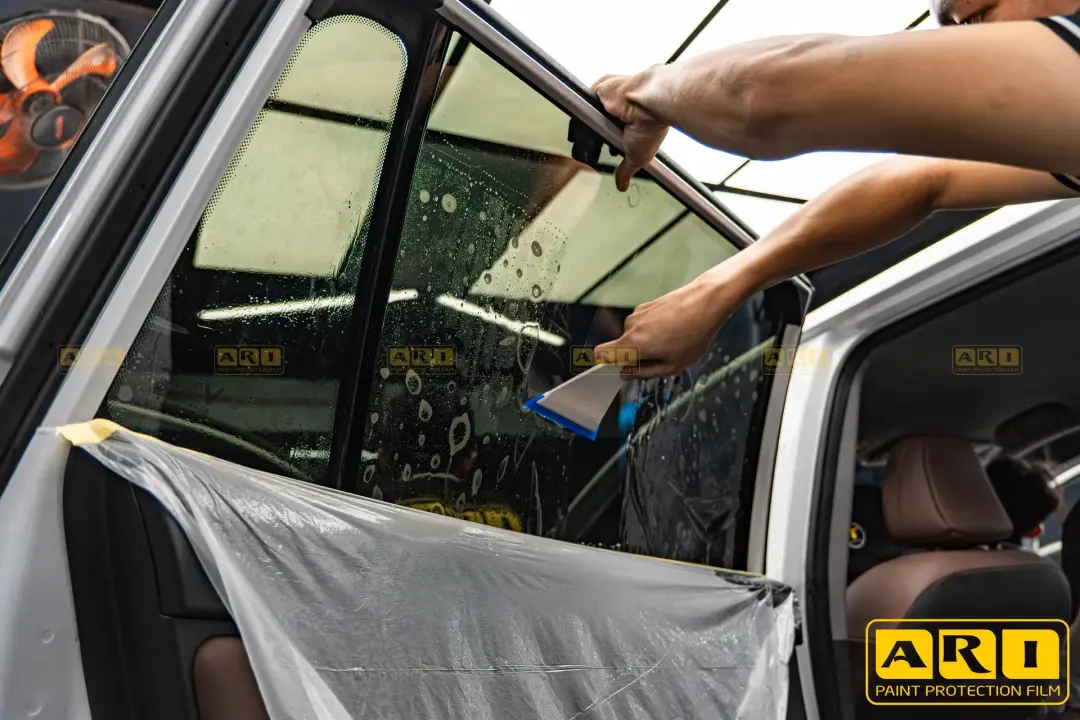
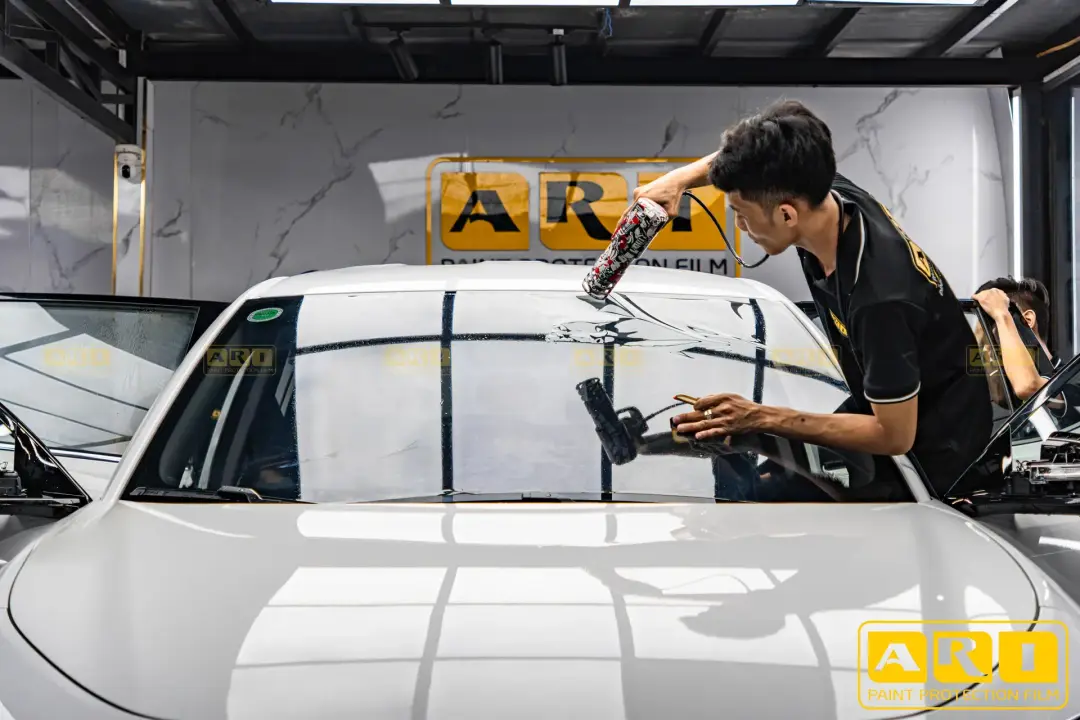
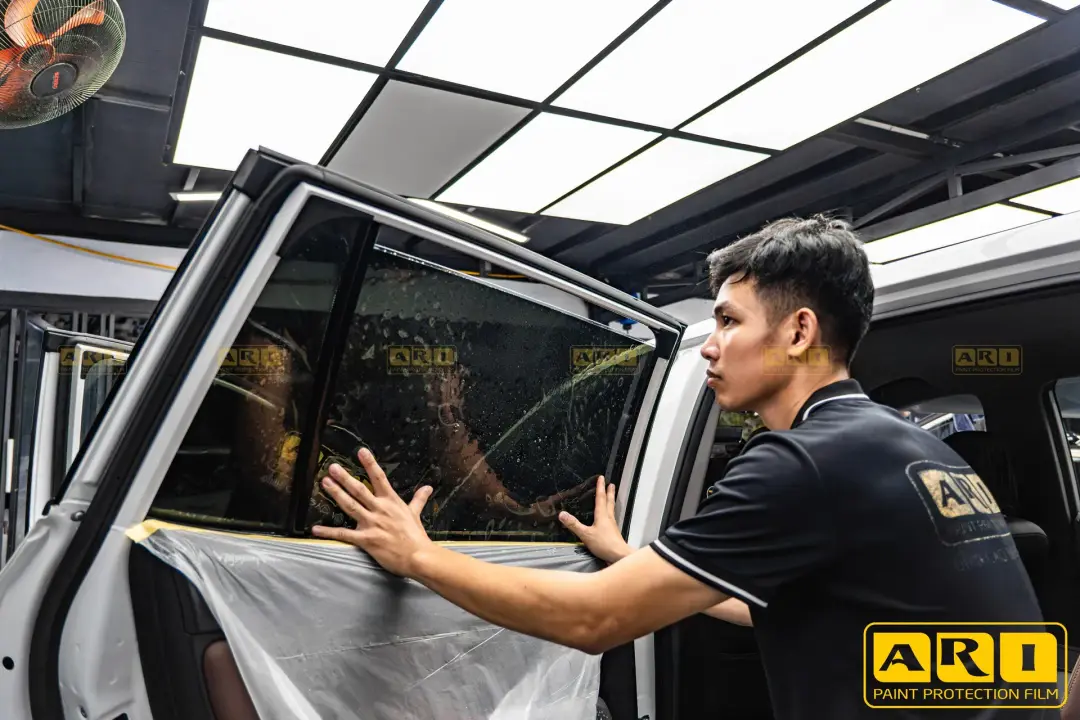
On the windscreen, the technician in black clothing used hand tools, a cloth and a scraper to prepare the glass surface before applying the film. On the rear side door glass, the technician pressed the film onto the glass with both hands, with the protective liner still in place. On the front right door glass, the technician applied the film by hand together with a blue and white squeegee, with a liner covering the interior below.
On the cabin-area glass, the technician used a squeegee to smooth the clear film once it covered the glass. The interior was covered with cloth and protective liner throughout the work.
How should you care for glass after window film is installed?
After installation, the film needs time to dry and bond firmly to the glass, and during this period the surface should not be pulled or touched hard. When cleaning, use a soft cloth and a solution without abrasive ingredients to avoid scratching the film layer.
For another job of the same kind, take a look at our Suzuki XL7 heat rejection film installation by the ARI workshop team.