Dark paint absorbs more heat, and large glass areas plus a seven-seat cabin can make the interior hot when parked under the sun. The sections below cover the film used, the areas treated on this XL7, and how the workshop carried out the job.
What Is the LUX Series Film Fitted on This XL7?
This job used LUX Series film, a line that comes with a Lifetime Limited warranty, and the same film is also used for car window tinting. The line includes four codes, with the following specifications:
- LUX 70: 68% visible light transmission, 99% infrared rejection, 99% UV rejection, 65% TSER, 2 Mil thickness, 35% glare reduction.
- LUX 50: 50% visible light transmission, 99% infrared rejection, 99% UV rejection, 65% TSER, 2 Mil thickness, 46% glare reduction.
- LUX 20: 18% visible light transmission, 99% infrared rejection, 99% UV rejection, 75% TSER, 2 Mil thickness, 78% glare reduction.
- LUX 05: 05% visible light transmission, 99% infrared rejection, 99% UV rejection, 86% TSER, 2 Mil thickness, 91% glare reduction.
The workshop has not confirmed which of these four codes was applied to this XL7, so the figures above are listed for each code.
Which Areas of the XL7 Were Covered With Film?
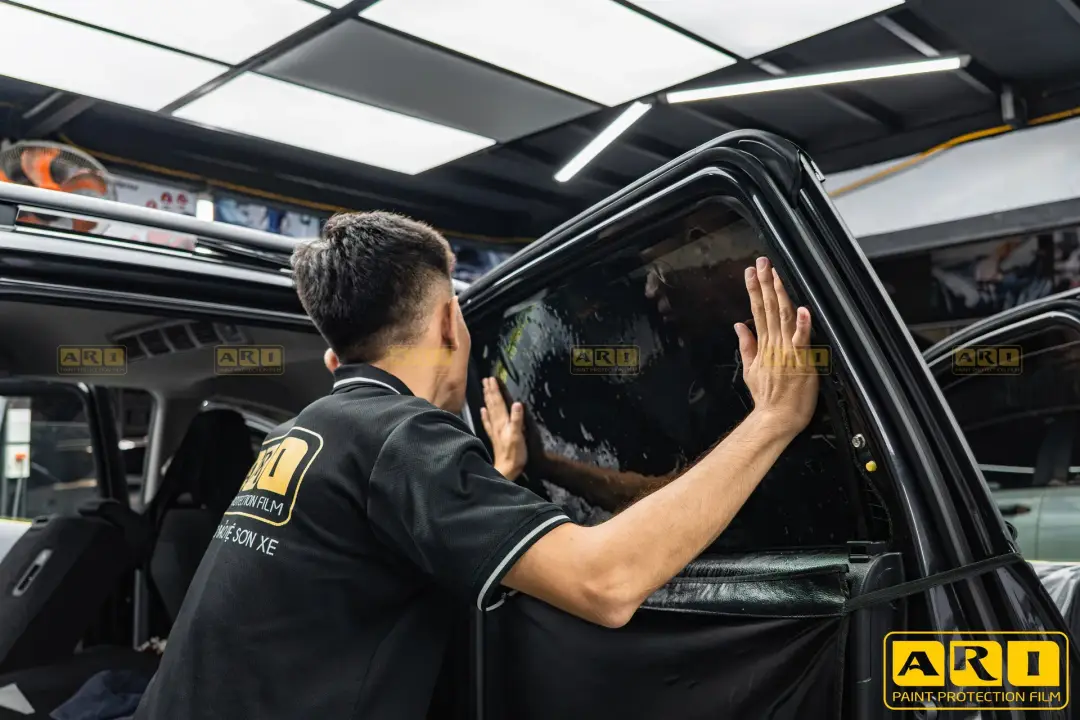
The workshop photos show that the windshield, front door glass, rear door glass and rear hatch glass of the black XL7 were all treated with heat rejection film using the standard method familiar to installers.
Windshield and Front Door Glass
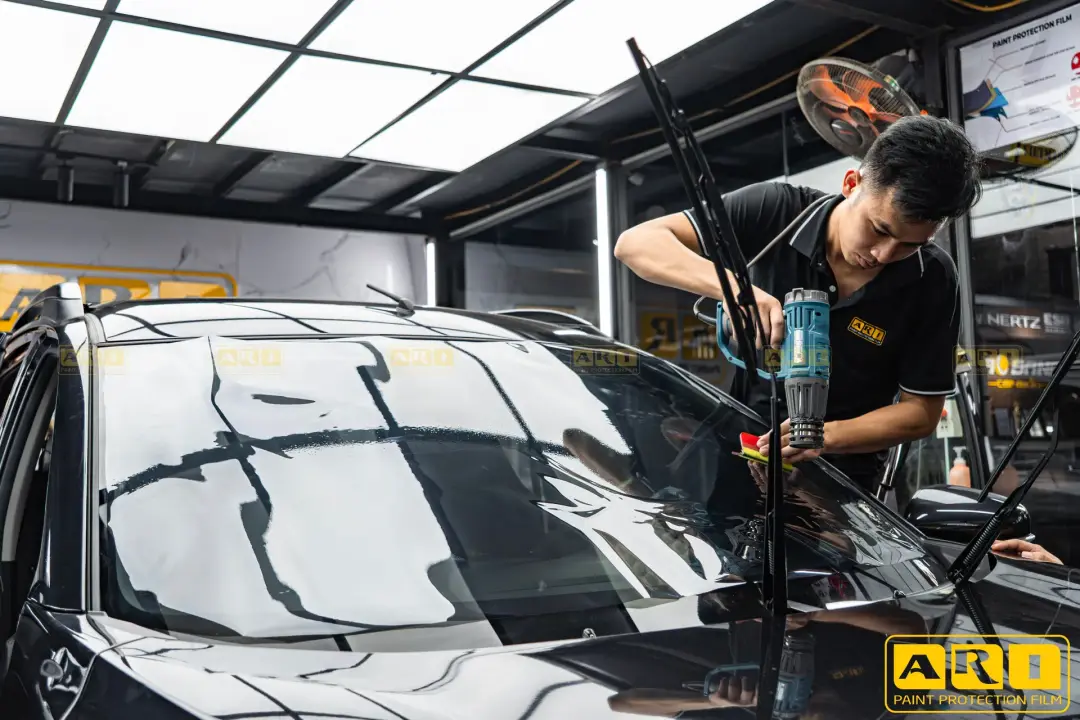
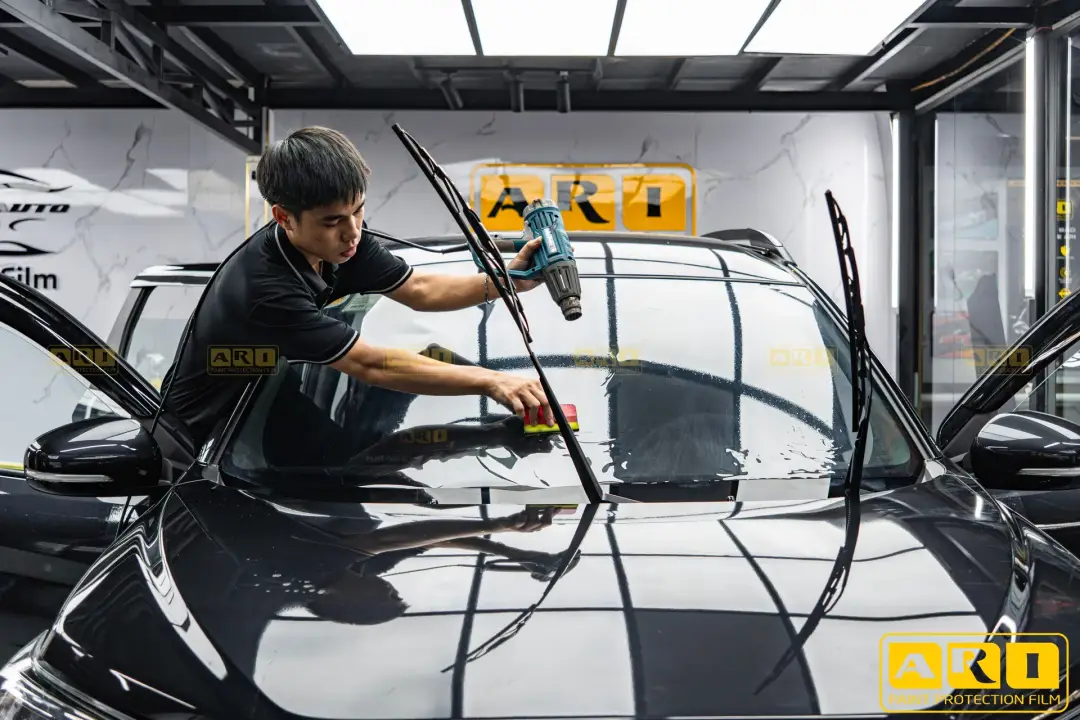
The technician used a heat gun and squeegee on the windshield, with the black glossy hood visible in front. On the driver's side, the installer pressed the hand against the front door glass while applying the film.
Rear Door Glass and Rear Hatch Glass
On the side of the vehicle, the technician used a squeegee tool on the left rear door glass, while the right rear door was open for the work. At the rear, the installer applied film to the inside of the tailgate, which is the XL7's rear glass.
How Did the Workshop Handle the Film Installation on the XL7?
The workshop worked directly on the vehicle in an enclosed space. Technicians used a heat gun, squeegees and specialized tools to smooth the film and remove air bubbles before it bonded firmly to the glass. The Suzuki XL7 heat rejection film was installed panel by panel to keep the film flat and the edges neat.
Beyond the glass, the technician also worked inside the cabin, where the steering wheel and center display had been fitted with protective film.
How Should You Care for the XL7 After Film Installation?
After installation, the film needs time to dry completely and bond firmly to the glass. During this period, it is best to avoid lowering the windows and to keep hard knocks off the film surface.
When cleaning, use a soft cloth and a mild solution. Avoid hard objects and harsh chemicals, which can scratch the film.
Explore another window film job from our ARI workshop, the Kia Carnival window tint, on its own page through the link.